


What You Need To Do To Protect Yourself From AI’s Dangerous Impact on Cybersecurity
Artificial Intelligence (AI) has emerged as a transformative technology across various industries, and its impact on cybersecurity is no exception. In today’s digital landscape, where cyber threats are constantly evolving, organizations and individuals rely on AI to enhance their defensive capabilities. However, this reliance on AI also introduces new challenges and vulnerabilities, making both users and businesses more susceptible to attacks. In this article, we will explore the role of AI in cybersecurity, its advantages, potential risks, and its impact on users and businesses.
In the realm of cybersecurity, AI refers to the utilization of machine learning algorithms and intelligent systems to detect, prevent, and respond to cyber threats. With the exponential growth of data and the increasing complexity of attacks, traditional approaches to cybersecurity fall short. AI brings a new level of sophistication by analyzing vast amounts of data, identifying patterns, and making intelligent decisions in real time. It has become a crucial component in safeguarding digital assets and sensitive information.
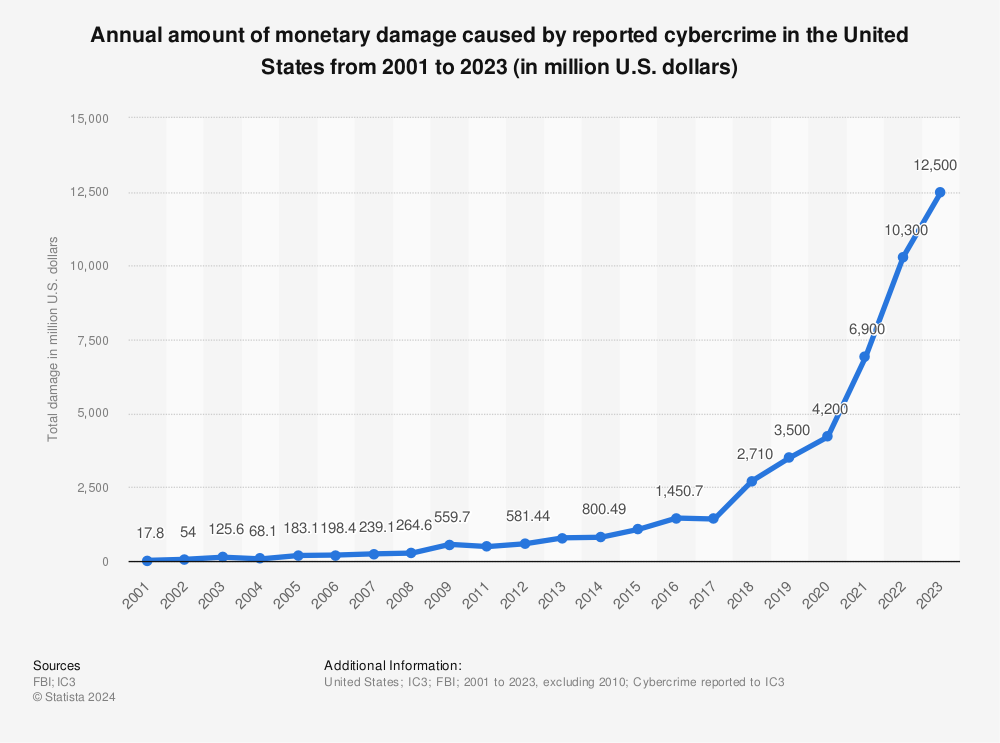
With AI now being used by cybercriminals, the dollar cost to individuals and businesses has grown exponentially. Since 2019 there has been an increase of almost 300% growing from $3.5 billion to over $10.3 billion. And that growth is only expected to accelerate.
Emerging AI Threats: The Rise of AI-Powered Hackers

In recent years, advancements in artificial intelligence (AI) have opened up new avenues for technological progress and innovation. However, like any powerful tool, AI can be harnessed for malicious purposes as well. Today, we find ourselves facing a new breed of cyber threats: hackers utilizing AI to launch sophisticated and highly effective attacks. This article explores the emerging threats posed by AI-powered hackers and the implications they have for individuals, organizations, and society as a whole.
Enhanced Attack Capabilities
By incorporating AI into their arsenals, hackers are able to significantly enhance their attack capabilities. AI algorithms can automate various stages of the hacking process, from reconnaissance and target selection to vulnerability identification and exploitation. This automation enables hackers to launch large-scale attacks with unprecedented speed and precision, making it increasingly challenging for traditional security measures to keep up.
Evolving Social Engineering Techniques
AI-powered hackers are adept at leveraging AI algorithms to craft sophisticated social engineering techniques. They can analyze vast amounts of data, including social media profiles, online behaviors, and communication patterns, to create highly personalized and convincing phishing emails, voice calls, or text messages. These AI-generated attacks can deceive even the most vigilant individuals, resulting in compromised credentials, data breaches, or financial losses.
Advanced Malware and Stealthy Attacks
AI empowers hackers to create advanced malware that can evade traditional signature-based detection systems. Machine learning algorithms enable hackers to develop malware that constantly evolves and adapts to countermeasures. These AI-generated malware strains can exploit zero-day vulnerabilities and go undetected for extended periods, wreaking havoc on targeted systems and networks.
Targeted Attacks and AI-Driven Exploits
AI algorithms can quickly identify and exploit vulnerabilities in systems, software, and networks. Hackers utilize AI-powered scanning tools to automatically identify weaknesses and launch targeted attacks. They can also employ AI-driven exploits to take advantage of emerging vulnerabilities, staying one step ahead of security patches and updates. This dynamic landscape poses significant challenges for organizations striving to defend against these AI-enhanced attacks.
Deepfake Threats
The emergence of AI-powered deepfake technology has raised concerns in various domains, including cybersecurity. Hackers can exploit deepfake techniques to manipulate digital content and create convincing yet false information, such as doctored videos, audio recordings, or images. This can be used to spread misinformation, defame individuals or organizations, or even deceive authentication systems, leading to severe consequences in both personal and professional spheres.
As AI continues to advance, so too does the potential for AI-powered cyber threats. The rise of AI-enabled hacking presents significant challenges for individuals, businesses, and governments. It is crucial to develop robust cybersecurity measures that leverage AI for defense, such as using machine learning algorithms to detect and mitigate AI-driven attacks. Moreover, a comprehensive approach involving international cooperation, legal frameworks, and user education is needed to address the ethical and societal implications of AI-powered hacking. Only by staying vigilant and adaptive can we safeguard our digital ecosystems in the face of these evolving threats.
AI’s Impact on Businesses

According to cyber attacks statistics, small businesses were the main targets of 43% of cyber attacks.
As large organizations become more knowledgeable about its ins and outs of cybersecurity and learn to invest resources in it, cyber criminals tend to divert their attention toward smaller businesses. Considering the size of small businesses (especially in their early stages of operations), they probably do not deem cybersecurity their top priority, which makes them more vulnerable to internet security threats.
The integration of AI in cybersecurity has also made businesses more vulnerable to various threats.
Data breaches and financial losses
Data breaches have become increasingly common and devastating for businesses. AI-powered attacks can exploit vulnerabilities in systems and networks, leading to significant data breaches. The stolen data can be sold on the dark web or used for malicious purposes, resulting in financial losses, reputational damage, and legal consequences for businesses.
Advanced persistent threats (APTs)
AI-powered APTs are sophisticated and stealthy attacks that target organizations over an extended period. These attacks leverage AI algorithms to evade traditional security measures, making them harder to detect and mitigate. APTs can gain unauthorized access to sensitive information, monitor activities, and extract data covertly, posing a severe threat to businesses.
Insider threats and employee monitoring
While AI helps identify external threats, it can also play a role in monitoring insider threats. AI systems can analyze employee behavior, network activity, and data access patterns to detect any unusual or suspicious actions. This monitoring helps organizations prevent and respond to insider threats, ensuring the security of sensitive information.
AI’s Impact on Users
The widespread use of AI in cybersecurity has had a profound impact on individual users’ vulnerability to cyber threats.
AI-powered systems can analyze vast amounts of user data, including social media profiles and online behaviors. Adversaries can exploit this information to craft sophisticated phishing attacks tailored to individual users. Such attacks can be challenging to identify, making users more susceptible to falling victim to scams and identity theft.
Phishing email seems to be the quickest way cyber criminals can get access to one’s device, network, and important information. This was confirmed by PhishMe research reporting that 91% of cyber attacks start with a phishing email. The research further found that, despite receiving security awareness training, the healthcare sector is most at risk of phishing attacks.
AI-generated deepfake content
Deepfake technology, fueled by AI, allows adversaries to create realistic and convincing fake audio, video, or text content. This technology can be used for impersonation, spreading misinformation, or manipulating public opinion. As deepfake techniques continue to improve, users need to be cautious when consuming online content and verify the authenticity of information.
Identity theft and fraud
AI-powered cybercriminals can leverage advanced techniques to steal personal information and perpetrate identity theft. By analyzing vast amounts of publicly available data, AI algorithms can piece together individual profiles, making it easier to impersonate users and carry out fraudulent activities. Users must remain vigilant, protect their personal information, and employ strong authentication methods to mitigate these risks.
Advantages of AI in Cybersecurity

While AI presents certain risks and challenges that need to be addressed, AI also offers significant benefits to the field of cybersecurity, revolutionizing how threats are detected, monitored, and mitigated.
AI-powered threat detection
One of the significant contributions of AI in cybersecurity is its ability to enhance threat detection. Traditional security systems rely on rule-based signatures, which can struggle to keep pace with rapidly evolving threats. AI algorithms, on the other hand, can analyze large volumes of data, identify anomalous patterns, and detect previously unknown attack vectors. By continuously learning from new data, AI-powered threat detection systems become more accurate over time, enabling organizations to proactively mitigate risks.
AI-driven vulnerability assessment
Identifying vulnerabilities within a network or system is a critical aspect of maintaining robust cybersecurity. AI plays a pivotal role in automating vulnerability assessments, scanning systems for weaknesses, and prioritizing remediation efforts. By leveraging AI, organizations can streamline the identification and patching of vulnerabilities, reducing the window of opportunity for potential attackers.
Real-time monitoring and response
AI-powered cybersecurity solutions enable real-time monitoring of network traffic, system logs, and user behavior. By continuously analyzing data streams, AI systems can quickly identify anomalies, unauthorized access attempts, and suspicious activities. This proactive monitoring helps organizations detect and respond to threats promptly, minimizing potential damage.
Automation of repetitive tasks
AI excels at automating repetitive and mundane tasks, freeing up valuable time for cybersecurity professionals to focus on more critical activities. Tasks such as log analysis, vulnerability scanning, and routine security checks can be automated using AI, increasing efficiency and reducing human error.
Scalability and adaptability
AI systems can scale effortlessly to handle large volumes of data, making them well-suited for cybersecurity operations in complex environments. Additionally, AI algorithms can adapt and learn from new data, continuously improving their ability to detect emerging threats and evolving attack techniques.
Mitigating Risks and Enhancing Cybersecurity

To effectively mitigate risks and enhance cybersecurity in the AI era, organizations can adopt several measures:
Regular security assessments
Organizations should conduct regular security assessments to identify vulnerabilities, assess the effectiveness of AI-driven security systems, and stay updated with the latest threats and attack techniques. Penetration testing, vulnerability scanning, and code reviews are essential components of these assessments.
AI and human collaboration
While AI offers significant benefits, human expertise and intuition are still invaluable in cybersecurity. Collaborative efforts between AI systems and cybersecurity professionals can lead to more robust defenses. Humans can provide contextual understanding, interpret complex attack scenarios, and make informed decisions based on ethical considerations.
Strengthening encryption and authentication
Data encryption and strong authentication mechanisms are crucial for protecting sensitive information. Organizations should implement robust encryption protocols and multi-factor authentication to safeguard data from unauthorized access and mitigate the risks posed by AI-driven attacks.
Educating users and employees
Cybersecurity awareness and education play a pivotal role in mitigating risks. Organizations should provide regular training to employees and users, focusing on best practices for online security, identifying phishing attempts, and understanding the potential risks associated with AI technologies. Empowering users with knowledge enhances their ability to protect themselves and the organization.
In Conclusion
AI’s impact on cybersecurity is profound, providing enhanced threat detection capabilities, real-time monitoring, and automation of repetitive tasks. However, it also introduces risks, such as adversarial attacks, bias, and privacy concerns. Both users and businesses are more vulnerable to phishing attacks, deepfake content, identity theft, data breaches, and insider threats. By implementing a combination of technical measures, collaboration between AI and humans, and user education, organizations can mitigate risks and enhance cybersecurity in the AI era.
Frequently Asked Questions About AI’s Impact On Cybersecurity

1) How does AI improve threat detection in cybersecurity?
AI improves threat detection by analyzing large datasets, identifying patterns, and detecting anomalies that may indicate malicious activity. It helps organizations stay ahead of evolving threats and respond effectively.
2) What are the potential risks associated with AI in cybersecurity?
Potential risks include adversarial attacks on AI systems, bias in algorithms, and privacy concerns due to increased data collection and analysis.
3) Can AI prevent all cyberattacks?
While AI enhances cybersecurity, it cannot prevent all cyberattacks. It is crucial to implement a layered security approach that combines AI technologies with other preventive measures.
4) How can businesses protect themselves from AI-driven threats?
Businesses can protect themselves by conducting regular security assessments, implementing strong encryption and authentication mechanisms, and fostering a cybersecurity culture through employee education and awareness.
5) Is AI a replacement for human cybersecurity professionals?
AI is not a replacement for human cybersecurity professionals. While AI can automate certain tasks and enhance threat detection, human expertise is still crucial for interpreting complex situations, making ethical decisions, and responding to unique or evolving threats.
6) How can organizations address bias in AI algorithms used for cybersecurity?
Organizations can address bias in AI algorithms by ensuring diverse and representative training datasets, conducting regular audits of algorithm outputs, and implementing mechanisms to detect and mitigate bias. Ethical considerations should be paramount in the development and deployment of AI technologies.
Key privacy concerns include the collection and storage of large amounts of user data, potential misuse or mishandling of sensitive information, and the risk of unauthorized access to personal data. Organizations must prioritize data protection and comply with relevant privacy regulations.
8) Can AI-powered cybersecurity solutions adapt to evolving threats?
Yes, AI-powered cybersecurity solutions are designed to adapt to evolving threats. By continuously learning from new data and analyzing emerging patterns, AI algorithms can improve their detection capabilities and stay ahead of rapidly evolving cyber threats.
9) How can individuals protect themselves from AI-generated deepfake content?
Individuals can protect themselves from AI-generated deepfake content by verifying the authenticity of information from reliable sources, being cautious when sharing personal information online, and using critical thinking skills to evaluate the credibility of content.
10) What role does user education play in cybersecurity with the rise of AI?
User education is vital in cybersecurity, especially with the rise of AI. By educating users about potential risks, common attack vectors, and best practices for online security, individuals can become more aware and proactive in protecting themselves against cyber threats.

Greg has been put through the test from eccentric people in the sticks of Vermont; to small business owners with funky old PCs; to large college campuses such as Dartmouth where he worked in IT for over five years.
Greg has a Masters Degree in IT Business Management, as well as being Apple and Microsoft MCP certified.
- AI Has Just Changed The Internet Forever - October 22, 2026
- Shadow AI: The Silent Security Breach Happening Every Day in 8 Out of 10 Small Businesses - July 20, 2026
- 3 Cybersecurity Threats Small Businesses Should Be Aware Of Right Now - June 25, 2026


